
.webp)


From pet stores selling pet foods and accessories to beauty and skincare brands, here are trending 6 small business ideas for you to capitalize on.


%20(1).png)
For a business to be successful, you know what’s bigger than your marketing budget, design, and checkout speed? It’s picking a winning product category. If you get the category right, everything downstream gets easier. Here are 6 data-backed small business ideas for your Shopify store:
If you are googling terms like small business ideas, grocery should be your top choice. You can gauge the volume from the fact that grocery makes 19.0% of all online retail sales in the US. Furthermore, the sector is one of the fastest growing with forecasts of 27.3% year-over-year.
Business angle: specialty and shelf-stable food brands (snacks, coffee, specialty diets) are thriving on Shopify specifically. Shopify merchant data from late 2025 showed instant coffee sales up 1,339% year-over-year. It’s your sign that convenience-driven food products are having a real moment. So, the earlier you capitalize on it, the more chance you have to succeed as a business owner.
Another one of the trending small business ideas is apparel and accessories. Yes, we know the market is crowded but data shows that the sector alone makes up 18.7% of all US ecommerce sales. Likewise, clothing, shoes, and beauty consistently rank as the top 3 digital purchase categories among US shoppers.
Business angle: Shopify report titled 20 trendy things to sell online observed that hoodies and puffer jackets are seeing outsized growth at +965% and 819% respectively. Second, dupe culture is strengthening its roots aggressively as 16% of the shoppers say they have bought a cheaper alternative to a viral or luxury product after seeing it online. This alone is a massive opportunity to build and then scale your online Shopify store.
So, the catch is that if you can provide better-value apparel combined with a well-branded strategy, you can win customers and build a sustainable business.
Another sector to target for small business ideas is health and beauty ecommerce. The growth rate for this sector in the USA is a commendable 11%. A study by Digital Commerce 360’S 2026 State of American Ecommerce Report found health and beauty merchants made a staggering $43.55 billion in 2025 in online sales alone.
It means the health, beauty and wellness sector outpaced other sectors such as flowers, office supplies, jewelry and auto parts.
Business angle: if you are a fitness enthusiast, you will be happy to know that the US dietary supplements market alone reached $68.74 billion in 2025 after witnessing a growth rate of 8.5% annually. Interestingly, the US skincare market also went through the same 8.5% growth annually whereas the sector is projected to hit $37.97 billion in 2026. On Shopify specifically, digestive supplements were up 1,075% and beef tallow moisturizer searches were up 2,600%. If anything it proves that shoppers are actively hunting for wellness-forward, ingredient-conscious products right now.
With fitness craze on rise, influencer-led brands are also thriving. So, if you are a fitness influencer, this is a golden opportunity for you. If you are not a fitness influencer yourself, you can collaborate with one to launch and build a sustainable product.
Another sector to target for small business ideas is the US pet industry. The sector is all set to hit a mammoth $165 billion in 2026. Similarly, online pet sales are growing nine times faster than brick-and-mortar retail, across roughly 95 million pet-owning US households.
Business angle: this idea has the most potential to succeed as pet owners are repeat buyers. The catch? Your product needs to be good. It has also been noted that subscriptions, auto-replenishment, and loyalty programs perform especially well here, making this one of the strongest categories for building long-term customer lifetime value rather than one-off sales.
Another business consistently topping the charts of small business ideas that are successful is furniture and home furnishing. The sector accounts for roughly 14.6% of the US ecommerce sales. The global business potential is huge, too. It is projected to reach a staggering $220.1 billion in 2027.
Business angle: he sector comprising household items and home goods is going through double-digit growth as more and more consumers are investing in their living spaces. Thus, it is one of the solid and durable categories for those merchants who can offer strong visuals accompanied by easy customization.
Mass merchant ecommerce (think Amazon, Walmart, Target, Costco-style multi-category retail) saw the highest online sales growth of any category in 2025, up 14.4% year-over-year.
Business angle: this doesn't mean independent brands can't compete. It means the winning play for smaller Shopify merchants is differentiation and a strong brand story rather than trying to out-catalog the giants. Salsify's 2026 research found that consumer trust increasingly hinges on authentic reviews, transparent product information, and a clear "why us", the areas where focused, single-category brands can consistently outperform mass retailers.
Irrespective of which product category of the aforestated products you select, the channel data has another story to tell. And this story concerns mobile apps.
Once you have built loyalty and retention, you can cut third-party platforms for your VIP customers. These are the customers who will place repeat orders. And there’s no reason whatsoever to burn money on them through meta or Google ads. These ads often make up to 33% of the product cost.
Also, we have noticed across merchants that mobile webs have 3x more retention, 35% higher order value on average, and 5x more engagement and product views.
Whichever category you're building in — grocery, apparel, wellness, pet, or home goods — the data points to the same conclusion: demand across nearly every major category is growing, and the customers driving that growth are shopping overwhelmingly on their phones. The merchants who win in 2026 will be the ones who match a high-demand product category with a mobile experience built to actually convert that traffic, not just attract it.
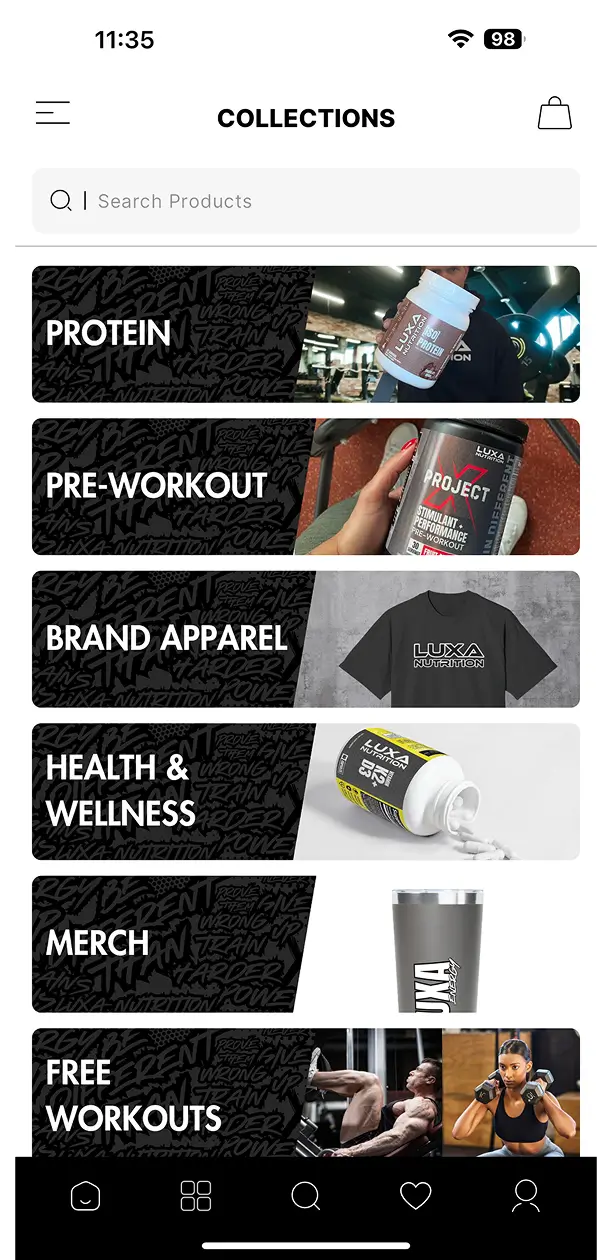
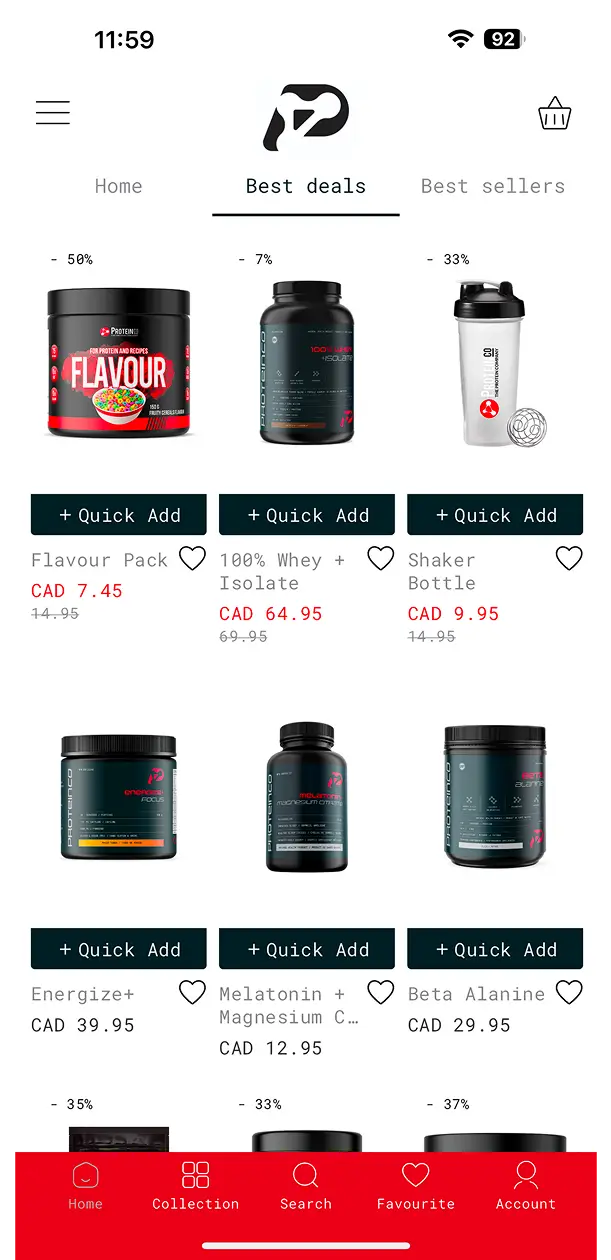
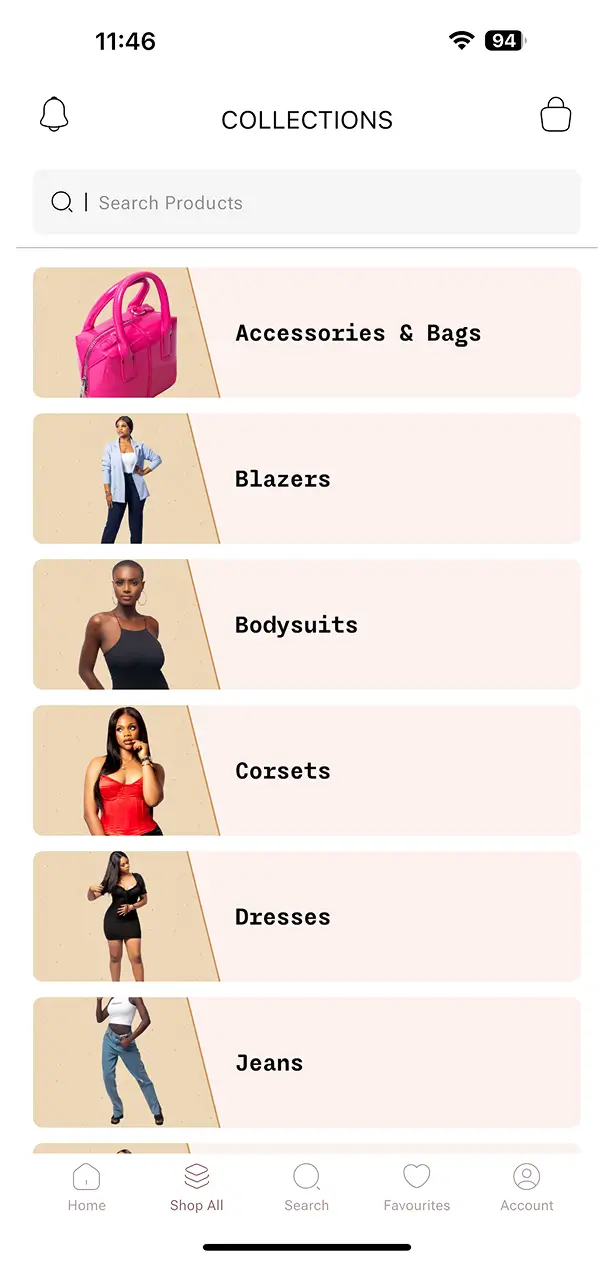
That's exactly the gap Tapday closes — turning any Shopify store, in any of these categories, into a fast, native iOS and Android app without a custom dev build. Tapday client Gran Vía saw an 84.9% higher conversion rate and 187% higher revenue per session through their native app versus mobile web — proof that once you're in a growing category, the app experience is what turns that traffic into revenue.
Content strategist and technical storyteller specializing in the SaaS and e-commerce space. I’m passionate about translating complex technical concepts into clear, actionable guides and helping brands build high-impact digital marketing engines.
Create a feature-rich mobile experience, harness AI-powered marketing tools, and send unlimited push notifications without paying commissions.
Try Tapday for free




Create a feature-rich mobile experience, harness AI-powered marketing tools, and send unlimited push notifications without paying commissions.
Try Tpaday for free.svg)
© 2025 Tapday, Technologies, Inc. All rights reserved.
.png)



%20(1).webp)
%20(1).webp)
%20(1).webp)
.webp)
